
Crisis Management Sprint
A tightly scoped stabilisation sprint for leaders who need to contain and de-escalate a critical incident in 24–72 hours. It combines a war-room cadence, narrative control, AI-enabled monitoring, and executive coaching to restore stability fast — and leave you better prepared for next time.
Built for reputational, operational, people, or governance incidents where hours matter, internal alignment is fraying, and the external narrative is outrunning the facts — public backlash, data or compliance issues, leadership exits, or workplace incidents.
What you bring
- A live or emerging incident that needs rapid containment and clear ownership
- Direct access to decision-makers and functional leads (comms, HR, legal, risk, ops, IT)
- The best available facts and constraints, including legal and regulatory boundaries
- Existing channels and any monitoring already in place
- A mandate to act decisively and align across silos for the duration
What you get (24–72 hours)
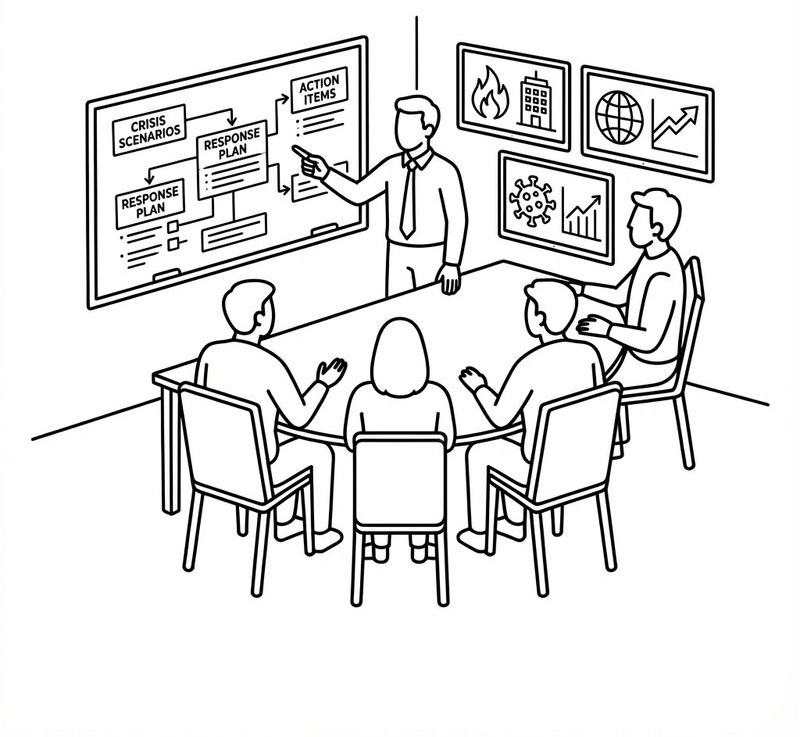
- War-room cadence: a time-boxed control room with clear roles, decision rights, and real-time tracking
- Narrative & stakeholder map: “what we know now,” scenarios, and tailored messaging per stakeholder
- Decision guardrails: non-negotiables and escalation paths that keep decisions fast and compliant
- Media & social kits: holding statements, FAQs, talking points, and response frameworks ready to deploy
- AI-supported monitoring: real-time listening and sentiment tracking to catch rumours and narrative shifts early
- Leader coaching: on-the-spot support for spokespeople and the crisis team
- After-action playbook: what worked, what didn’t, and how to strengthen people, process, and monitoring
How it runs
- Rapid intake: clarify status, constraints, key actors, and immediate risks
- First triage (within hours): risk assessment, priority calls, message hierarchy, first actions
- 24–72h stand-up rhythm: daily or twice-daily reviews to reset priorities and adjust
- Post-stabilisation: structured post-mortem and prevention planning that feeds your protocols and training
How we measure impact
- Time to stabilise and incident-severity trend
- Internal and external sentiment and rumour patterns
- Decision speed, clarity, and ownership
- Stakeholder alignment and message accuracy
- Board and regulator confidence, plus concrete readiness uplift